

Curious about mouth taping? Learn what it is, its potential benefits for sleep and oral health, plus safety tips and alternatives before trying it.
In recent years, many new health and wellness trends have popped up; one of which is mouth taping. While it may sound unusual, the idea behind it is simple: by encouraging you to breathe through what’s considered the body’s natural pathway—your nose—mouth taping is believed to offer potential health benefits.
But is it safe and effective? Can it really make a difference in how well you sleep? In this article, we’ll explore what mouth taping is, why people are trying it, and whether it’s a trend that lives up to the hype.
What Happens When You Sleep With Your Mouth Open?
.png)
Sleeping with your mouth open can cause a few problems. For one, it may cause dryness in the mouth, which increases the chance of getting cavities, gum disease, and bad breath.
Mouth breathing is also less effective at filtering and humidifying the air before it enters the lungs, which can result in a sore throat upon waking (interestingly, though, some patients who mouth tape report symptoms of sore throat as well, so this issue isn’t clear cut).
Mouth breathing could also worsen breathing and sleep apnea because when your mouth is held open to breathe, your lower jaw moves backward and reduces the size of your airway. This is where the concept of mouth taping comes into play.
What is Mouth Taping?
Mouth taping is the practice of putting a small piece of tape, patch, or other adhesive material over the mouth during sleep to encourage nasal breathing. The idea is to keep the mouth closed throughout the night, forcing the person to breathe through their nose.
Why Do People Mouth Tape?
People may try mouth taping for several reasons. Breathing through your nose filters the air you breathe better, reducing the dust and germs you inhale, and keeping the air you breathe moist and at the right temperature. Some believe that the superior filtration of the nose can improve how they feel overall.
What Does Science Say About Mouth Taping?
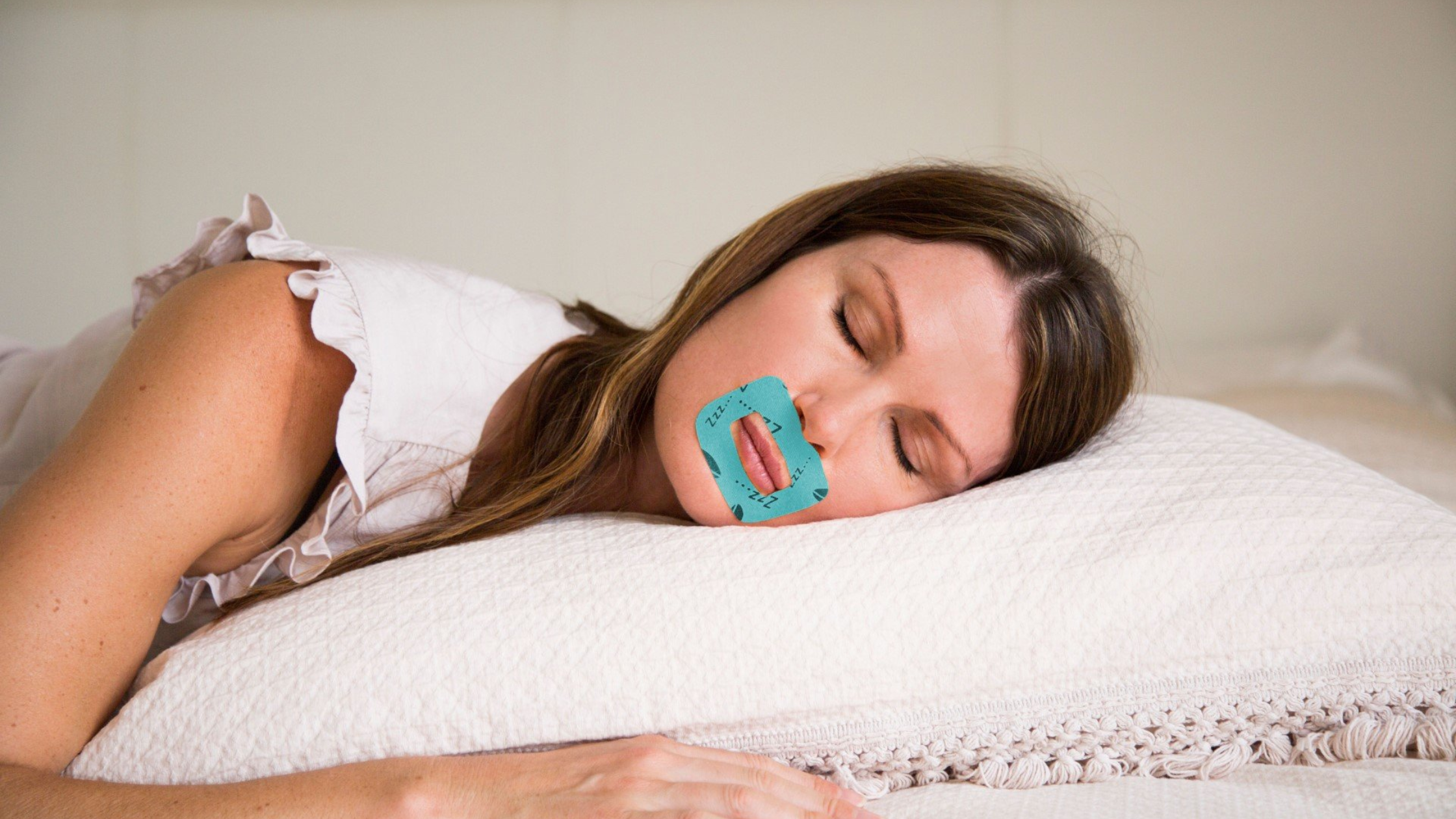
The scientific evidence on mouth taping is inconclusive. So far, there haven’t been enough studies to determine whether nasal breathing, facilitated by mouth taping, results in noticeable health benefits.
Some evidence suggests that mouth taping may be beneficial for individuals with mild sleep apnea. For this group, it has shown potential to reduce snoring and improve sleep quality. However, sleep apnea is a complex, multifactorial condition, meaning that mouth taping may not benefit all patients equally. In fact, for individuals with velopharyngeal obstruction or those who habitually breathe through their mouths, mouth taping may worsen airflow and exacerbate symptoms, making the treatment less effective or even counterproductive.
Mouth taping is also thought to promote nasal breathing, which may help maintain oral health by keeping the mouth moist. This could, in turn, reduce the risk of dental issues like cavities and gum disease. However, more research is needed to confirm this potential benefit.
Some proponents of mouth taping claim it can help alleviate teeth grinding, improve sleep quality, or even assist children with sleep problems or ADHD. However, these claims are not currently supported by scientific evidence. Studies on asthma patients have also shown no clear benefits from mouth taping.
Another misconception is that mouth taping can reshape the jaw in adults. While mouth breathing can affect facial development in children and adolescents, there is no evidence to suggest that mouth taping in adults can alter jaw structure.
Therefore, while mouth taping may offer potential benefits for some people, the scientific community still requires more research to fully understand its effects and limitations.
Should You Try Mouth Taping?
.png)
If you’re thinking about trying mouth taping, it’s important to consult a physician or sleep medicine specialist first. They can make sure you don’t have any underlying issues, like sinus Inflammation, a deviated septum, allergies, or sleep apnea that could make mouth taping unsafe. For instance, patients with obstructive sleep apnea (OSA) who rely on oral breathing as an essential airway route due to obstructions along the nasal passage (e.g., the velopharynx) may experience worsened symptoms with mouth taping. A sleep specialist can assess these factors to determine whether mouth taping is suitable for your unique needs.
Once you get the go-ahead, try practicing mouth taping during the day to get used to it. Start with short sessions and see if you can comfortably breathe through your nose for progressively longer time periods before trying it at night.
What Kinds of Tape Should I Use?
If you decide to give mouth taping a try, it’s important to use the right type of tape. Medical-grade tape or permeable patches specifically designed for use on the skin are best. Remember to look for gentle, hypoallergenic, and easy to remove tapes to reduce skin irritation.
Are There Safer Alternatives to Mouth Taping?
.png)
While mouth taping can be helpful for some, it’s not for everyone. Some patients may be interested in mouth taping because of claims that it can cure bad breath. However, an oral hygiene routine consisting of tooth brushing, flossing, and mouth rinsing is a more reliable way to prevent bad breath.
If you have trouble breathing through your nose, nasal strips or dilators and nasal breathing exercises may help, but it’s best to check with an ENT physician first before trying them. For people with sleep apnea, CPAP machines are the gold standard. If CPAP isn’t an option, a professionally-fitted oral sleep appliance can help keep your airway open while you sleep.
As always, check with a healthcare professional or a sleep medicine specialist first before trying any new treatments.


.avif)
