

Learn how advances in oral cancer detection and treatment improve outcomes, emphasizing the role of dental specialists in early diagnosis and prevention.

Beyond correcting teeth alignment, orthodontics also requires a thorough knowledge of oral health issues, including oral cancer. Recent advancements in the detection and treatment of oral cancer have been instrumental in improving patient outcomes. This article will explore the latest developments in oral cancer, highlighting how research and modern technology are shaping the future of oral health.
Why Early Detection Matters
Over the years, one of the largest advancements in oral cancer treatment has been the push for early detection. Oral cancer, when detected early, can often be treated conservatively, meaning with less invasive procedures and a better chance of recovery, as in the case of small lesions.
However, when oral cancer progresses to more advanced stages, it can invade vital structures in the head and neck, leading to serious complications and lower survival rates. Late-stage oral cancer usually requires more aggressive treatments, which can cause permanent changes in a patient’s ability to eat, drink, speak, or breathe.
In addition, while survival rates of most cancers have improved over time, the survival rate of oral cancer hasn’t improved markedly. This emphasizes why early detection is essential to improving the outcomes of oral cancer patients.
Innovations in Oral Cancer Detection
The good news is that recent technological advancements are helping detect oral cancer earlier. These innovations have the potential to significantly reduce morbidity and mortality.
Advanced Detection Tools
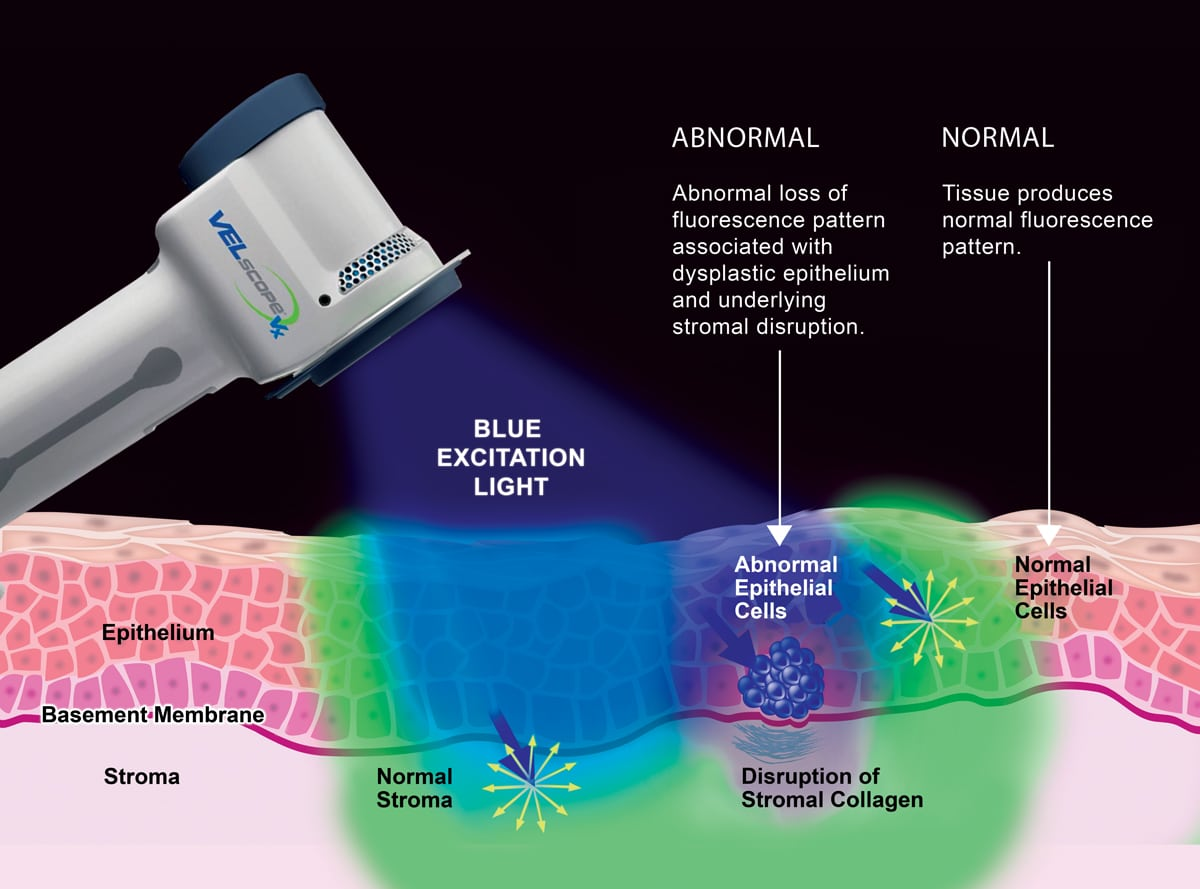
One tool that has gained traction in the dental world is the VELscope. It is a handheld tool that uses a special light that helps oral health professionals detect abnormal tissue that might indicate cancer. Another development is the increased use of the HPV vaccine, which could reduce the number of cases related to HPV—a known cause of oral cancers.
Non-Invasive Testing Methods
Another promising area of innovation is the development of non-invasive testing methods. Research into salivary biomarkers may assist with early diagnosis. Saliva contains a variety of genetic and protein markers that can indicate the presence of oral cancer. During routine check-ups, dental professionals can gather a saliva sample and send it to a lab to analyze for signs of cancer. If these tests can be developed to be easy, painless, sensitive, specific, and cost-effective, they could be administered twice a year during routine exams.
Similarly, liquid biopsies—which involve analyzing a small blood sample for cancer-related genetic material—offer a non-invasive way to monitor cancer progression in patients who have already been diagnosed.
Telemedicine’s Role in Oral Health

Complementing these advancements in early detection is the rise of telemedicine, which has supplemented the delivery of dental care, especially since the COVID-19 pandemic. Many practices, including ours, have adopted this approach to allow patients with busy schedules, mobility challenges, or those in remote locations to access consultations easily. In addition, telemedicine allows dental professionals to collaborate with oral cancer specialists worldwide, ensuring that patients benefit from the latest care and treatment options.
Challenges in Oral Cancer Screening
Despite the promising innovations in detection technologies, significant challenges remain in making oral cancer screenings widely accessible. One of the primary obstacles is the lack of insurance coverage for oral cancer screenings, which can deter patients from consenting to these tests. Additionally, some patients may be reluctant to pay out-of-pocket for screenings, even when they recognize the importance of early detection.
Dentists, being the healthcare practitioners who see patients with a degree of frequency, are ideally positioned to conduct these screenings. However, performing these tests requires additional time and specialized tools, which can strain already tight margins in dental practices. To ensure that dentists are adequately compensated for the resources and time devoted to oral cancer screening, efforts are ongoing to advocate for better insurance coverage. This includes initiatives aimed at establishing dental ADA codes specifically for oral cancer detection.
Innovative Technologies in Oral Cancer Treatment
.png)
As detection methods improve, treatment options for oral cancer are also evolving.
Immunotherapy
One of the most exciting developments in this area is immunotherapy. Generally, these therapies enhance the body’s immune system to better target and combat cancer cells. In the context of oral cancer, immunotherapy targets specific proteins that allow cancer cells to evade detection.
For patients facing advanced or recurrent cancers, this innovative treatment provides hope and has the potential to improve survival rates, especially in cases where traditional treatments like surgery or chemotherapy may not be effective.
Gene Therapy
Research into oral cancer is focused on learning more about the basic science of specific pathways responsible for each disease. One promising area of study is gene therapy, which aims to selectively insert into cancer cells either normal copies of genes to make them non-cancerous or chemotherapeutic-targetable genes to allow the body’s programmed cell death pathways to eliminate them.
Raising Awareness and Educating the Public
Indeed, there has been a somewhat greater awareness of oral cancer over the years. In the United States, smoking and excessive alcohol consumption—two of the most common causes of dysplasia (abnormal growth) that can lead to oral cancer—have been acknowledged more broadly to be cancer-inducing agents. Much progress remains to be made, however, especially in educating the public. Hopefully, by promoting education on these risks and the importance of regular screenings, we can empower the public to take charge of their oral health and seek preventive care.
The Future of Oral Cancer Care
The future of oral cancer care is cautiously optimistic for both patients and healthcare providers. Advancements in research, personalized genetic evaluation, artificial intelligence (AI), and machine learning may lead to earlier, less expensive, and more accurate detection of irregular tissues and improved survival and quality of life for patients. The goal is to provide each patient with the highest quality care possible.


.avif)
