September 3, 2026

3–5 minutos
-min.jpg)


Conoce qué es el sellado de la boca con cinta, sus posibles beneficios para el sueño y la salud oral, y consejos de seguridad.
En los últimos años han surgido muchas nuevas tendencias de salud y bienestar, una de ellas es el mouth taping. Aunque pueda parecer inusual, la idea detrás de esta práctica es simple: al animarte a respirar por lo que se considera la vía natural del cuerpo —la nariz—, se cree que el mouth taping puede ofrecer posibles beneficios para la salud.
Pero, ¿es seguro y realmente efectivo? ¿Puede de verdad marcar una diferencia en la calidad de tu sueño? En este artículo exploraremos qué es el sellado de la boca con cinta, por qué algunas personas lo están probando y si realmente es una tendencia que cumple con las expectativas.
.png)
Dormir con la boca abierta puede causar algunos problemas. Por ejemplo, puede provocar sequedad en la boca, lo que aumenta la probabilidad de desarrollar caries, enfermedad de las encías y mal aliento.
La respiración por la boca también es menos efectiva para filtrar y humidificar el aire antes de que llegue a los pulmones, lo que puede provocar dolor de garganta al despertar. Curiosamente, algunos pacientes que practican mouth taping también reportan síntomas de dolor de garganta, por lo que este tema no es del todo concluyente.
La respiración por la boca también puede empeorar la respiración y la apnea del sueño, ya que cuando la boca permanece abierta para respirar, la mandíbula inferior se desplaza hacia atrás, reduciendo el tamaño de la vía aérea. Aquí es donde entra en juego el concepto de sellado de la boca con cinta.
El sellado de la boca con cinta es la práctica de colocar un pequeño trozo de cinta, parche u otro material adhesivo sobre la boca durante el sueño para fomentar la respiración nasal. La idea es mantener la boca cerrada durante toda la noche, obligando a la persona a respirar por la nariz.
Las personas pueden practicar el sellado de la boca con cinta por varias razones. Respirar por la nariz filtra mejor el aire que inhalas, reduciendo el polvo y los gérmenes, además de mantener el aire humedecido y a la temperatura adecuada. Algunos creen que la mejor filtración nasal puede mejorar su bienestar general.
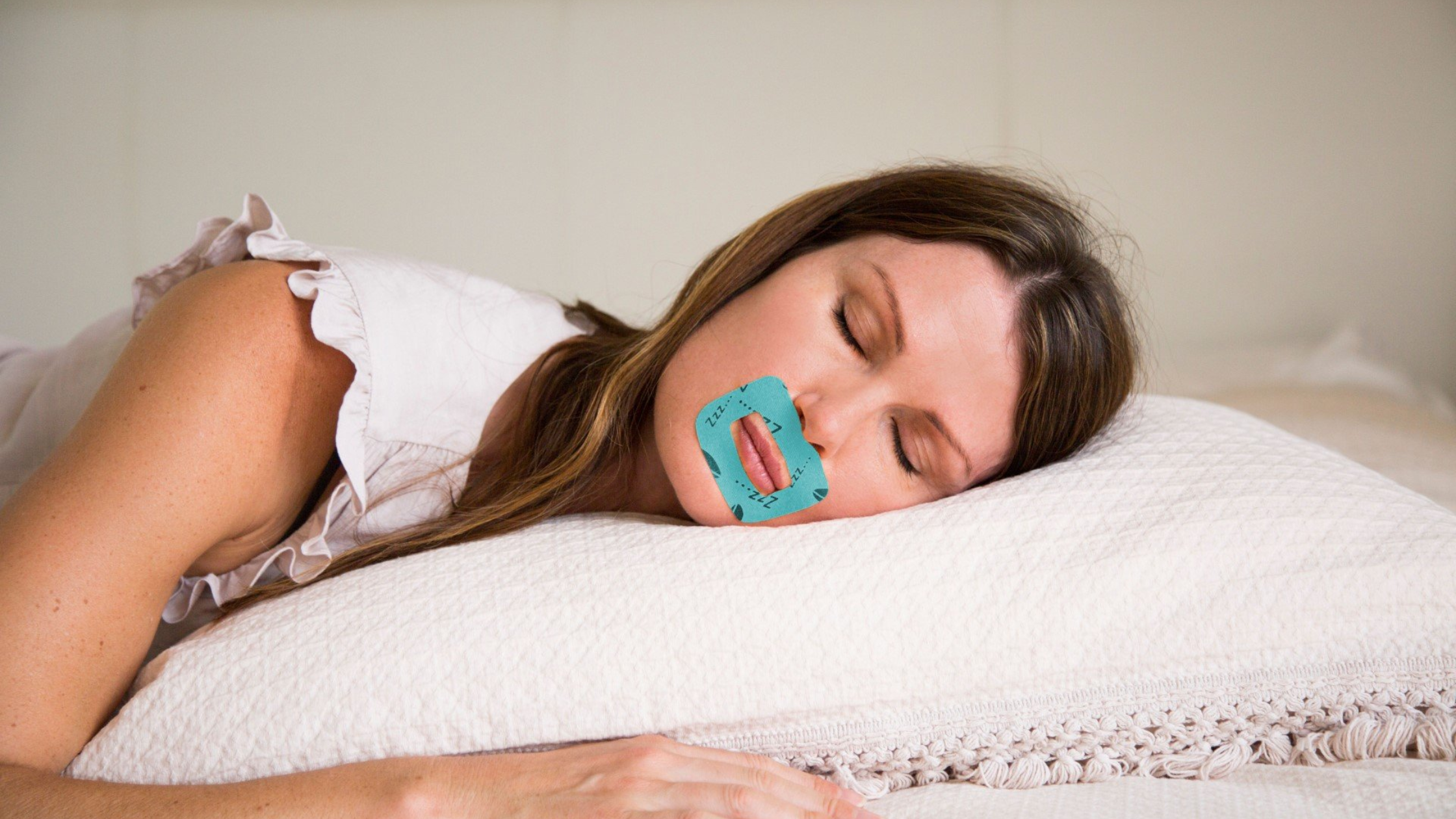
The scientific evidence on mouth taping is inconclusive. So far, there haven’t been enough studies to determine whether nasal breathing, facilitated by mouth taping, results in noticeable health benefits.
Some evidence suggests that mouth taping may be beneficial for individuals with mild sleep apnea. For this group, it has shown potential to reduce snoring and improve sleep quality. However, sleep apnea is a complex, multifactorial condition, meaning that mouth taping may not benefit all patients equally. In fact, for individuals with velopharyngeal obstruction or those who habitually breathe through their mouths, mouth taping may worsen airflow and exacerbate symptoms, making the treatment less effective or even counterproductive.
Mouth taping is also thought to promote nasal breathing, which may help maintain oral health by keeping the mouth moist. This could, in turn, reduce the risk of dental issues like cavities and gum disease. However, more research is needed to confirm this potential benefit.
Some proponents of mouth taping claim it can help alleviate teeth grinding, improve sleep quality, or even assist children with sleep problems or ADHD. However, these claims are not currently supported by scientific evidence. Studies on asthma patients have also shown no clear benefits from mouth taping.
Another misconception is that mouth taping can reshape the jaw in adults. While mouth breathing can affect facial development in children and adolescents, there is no evidence to suggest that mouth taping in adults can alter jaw structure.
Therefore, while mouth taping may offer potential benefits for some people, the scientific community still requires more research to fully understand its effects and limitations.
.png)
If you’re thinking about trying mouth taping, it’s important to consult a physician or sleep medicine specialist first. They can make sure you don’t have any underlying issues, like sinus Inflammation, a deviated septum, allergies, or sleep apnea that could make mouth taping unsafe. For instance, patients with obstructive sleep apnea (OSA) who rely on oral breathing as an essential airway route due to obstructions along the nasal passage (e.g., the velopharynx) may experience worsened symptoms with mouth taping. A sleep specialist can assess these factors to determine whether mouth taping is suitable for your unique needs.
Once you get the go-ahead, try practicing mouth taping during the day to get used to it. Start with short sessions and see if you can comfortably breathe through your nose for progressively longer time periods before trying it at night.
If you decide to give mouth taping a try, it’s important to use the right type of tape. Medical-grade tape or permeable patches specifically designed for use on the skin are best. Remember to look for gentle, hypoallergenic, and easy to remove tapes to reduce skin irritation.
.png)
While mouth taping can be helpful for some, it’s not for everyone. Some patients may be interested in mouth taping because of claims that it can cure bad breath. However, an oral hygiene routine consisting of tooth brushing, flossing, and mouth rinsing is a more reliable way to prevent bad breath.
If you have trouble breathing through your nose, nasal strips or dilators and nasal breathing exercises may help, but it’s best to check with an ENT physician first before trying them. For people with sleep apnea, CPAP machines are the gold standard. If CPAP isn’t an option, a professionally-fitted oral sleep appliance can help keep your airway open while you sleep.
As always, check with a healthcare professional or a sleep medicine specialist first before trying any new treatments.