Learn about enameloplasty, its pros and cons, and how subtle tooth reshaping can enhance your smile, including a patient before-and-after result.
A beautiful smile isn't always about making big changes. Sometimes, a small adjustment to the shape or edge of a tooth can help create a more balanced and polished smile. Enameloplasty, also known as tooth reshaping or dental contouring, is one option that can make these subtle refinements.
But what exactly is enameloplasty, and when might it be worth considering? Let's take a closer look at how it works, its benefits and limitations, and how it can sometimes complement orthodontic treatment.
What Is Enameloplasty?
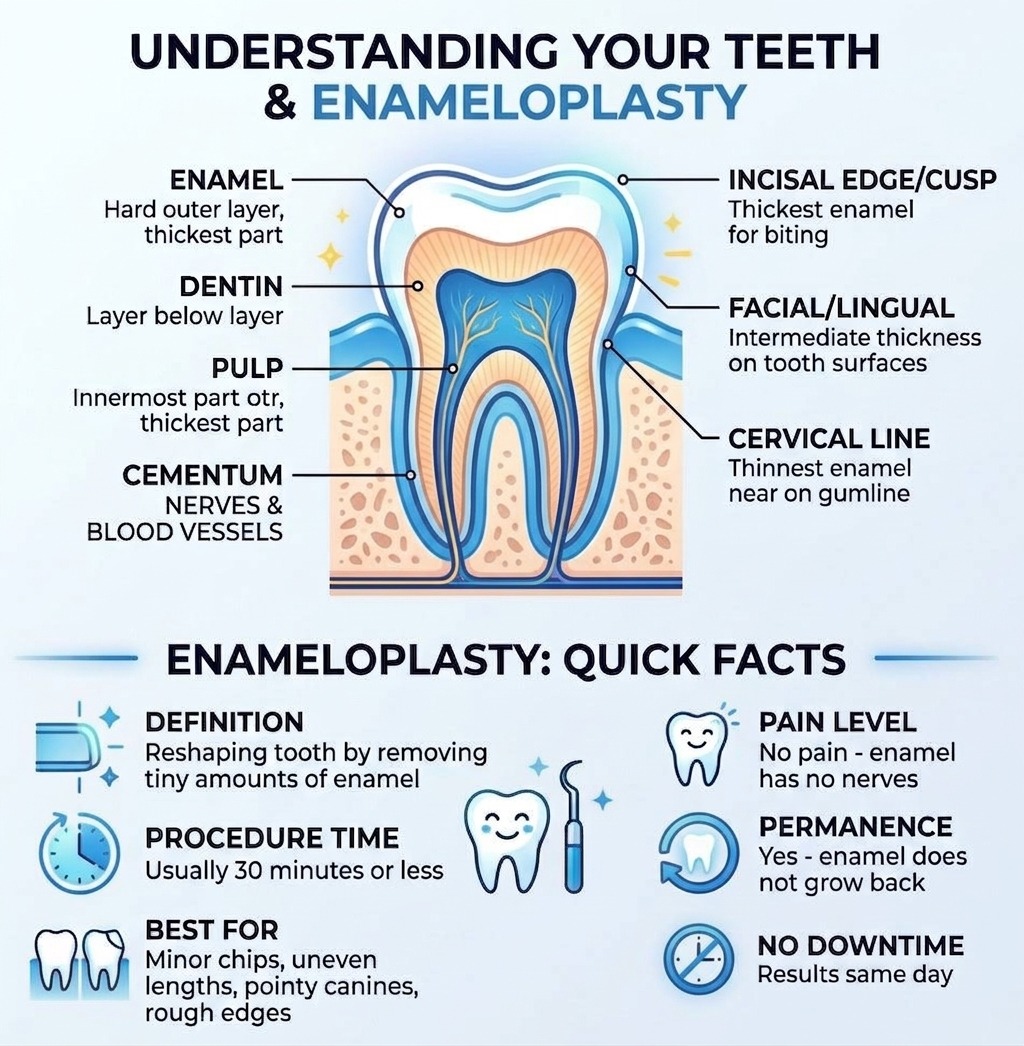
Enameloplasty is a procedure that involves carefully removing a small amount of enamel to change the shape, length, or edge of a tooth.
It may be used to smooth an uneven edge, make small adjustments to tooth proportions, or create better symmetry between neighboring teeth.
Because enamel is the protective outer layer of your teeth and does not grow back once removed, enameloplasty should be conservative and carefully planned. The goal is to make the desired improvement while preserving as much healthy enamel as possible.
Why Consider Enameloplasty?
Enameloplasty is generally considered for minor changes to tooth shape, rather than major dental or orthodontic concerns.
It may be an option if you have:
- Slightly uneven or irregular tooth edges
- Small differences in tooth length or shape
- A tooth that looks a little asymmetric compared to its twin on the other side of the arch
- A shape that conflicts with neighboring teeth
- Minor cosmetic concerns that remain after orthodontic treatment
For most orthodontic patients, enameloplasty may be considered at the end of braces or clear aligner treatment when the teeth are properly positioned but small differences in their shape remain.
Pros and Cons of Enameloplasty
Like any dental procedure, enameloplasty has both benefits and limitations.
Pros
Subtle improvement: Small changes to tooth shape can help create a more balanced-looking smile.
Conservative treatment: Only a small amount of enamel is removed.
No anesthesia: Usually not painful, can be done without anesthetic quickly.
No downtime: No recovery needed, can immediately eat after
Can complement orthodontic treatment: Once braces or aligners have moved the teeth into their desired positions, minor reshaping may sometimes be used as a finishing detail.
Cons
The change is permanent: Enamel does not grow back after it is removed.
It cannot straighten teeth: Enameloplasty changes tooth shape, not tooth position. It cannot replace braces or clear aligners for problems such as crowding or rotated teeth.
It is limited to small changes: Significant changes to tooth size or shape may require a different dental treatment.
Too much enamel removal can cause problems: Excessive removal can increase the risk of sensitivity and other dental concerns, which is why careful evaluation is important.
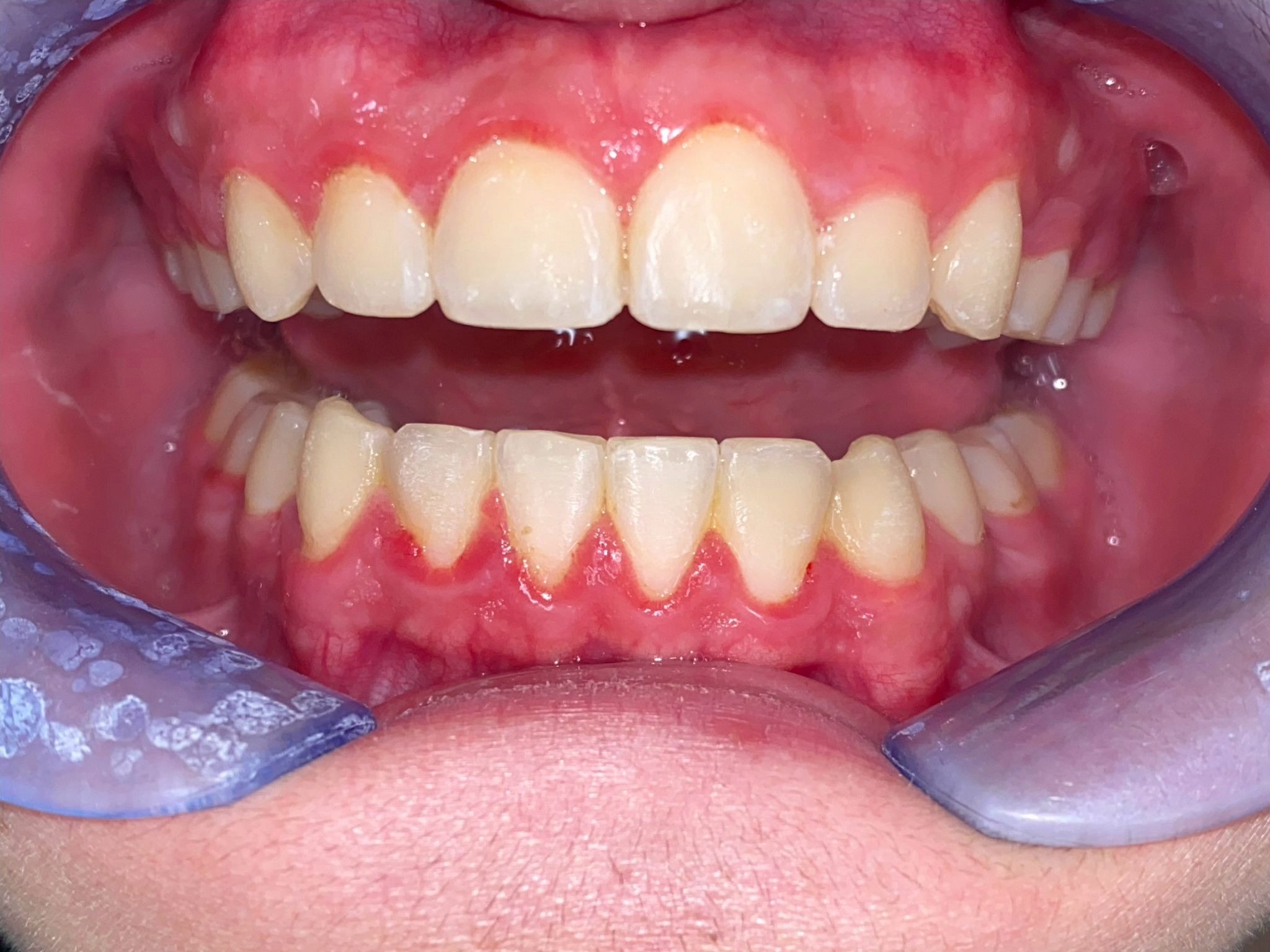
Enameloplasty Before and After: A Patient Example
Small changes can make a significant difference in the overall appearance of a smile.
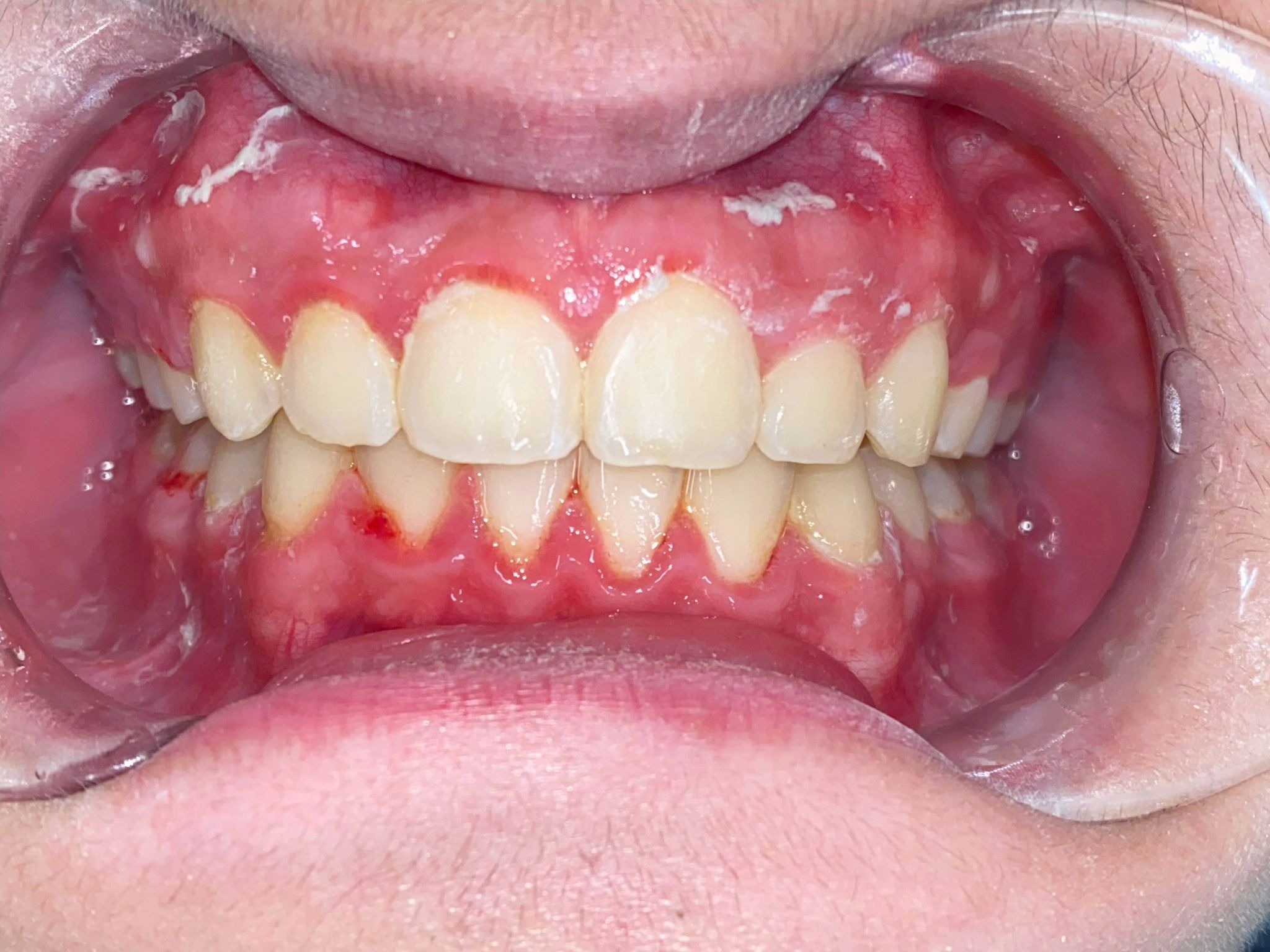
In this patient example, enameloplasty was used to make carefully planned refinements to the shape and edges of the teeth. The before-and-after results demonstrate how subtle reshaping can help create a more balanced appearance while maintaining the patient's natural smile.
Before
Mild example: The patient's teeth had subtle differences on the edges that affected the overall balance of the smile.
After
Following conservative enamel reshaping, the tooth edges are more harmonious, resulting in an improved aesthetic. The goal of enameloplasty is not to dramatically change the teeth. Instead, it focuses on making small adjustments when alignment is already optimized to improve the overall appearance of the smile.
Individual results vary, and not every patient will be a candidate for enameloplasty.
Enameloplasty vs. Braces and Clear Aligners
It's important to understand that enameloplasty and orthodontic treatment do different things.
Braces and clear aligners move teeth. Enameloplasty adjusts the edge of the teeth.
For example, if a tooth is properly positioned but has a slightly uneven edge, enameloplasty may help refine its appearance. If a tooth is crowded, rotated, or out of position, orthodontic treatment is needed instead.
These treatments usually work together. Orthodontic treatment establishes proper tooth alignment, then minor enameloplasty provides additional refinement when appropriate.
Is Enameloplasty Right for You?
Whether enameloplasty is appropriate depends on your individual teeth.
Your dental professional may evaluate:
- The amount of healthy enamel available
- The shape and size of the tooth
- Your bite and alignment
- Existing dental restorations
- Any history of tooth sensitivity
- How much reshaping would be needed
- Would dental restorations like fillings, veneers, or crowns provide a better result?
Because enameloplasty is permanent, the procedure should only be performed when the benefits and potential risks have been considered.
Frequently Asked Questions
Does enameloplasty hurt?
Minor enameloplasty is generally well tolerated because only a small amount of enamel is reshaped. In most cases, it is not painful. On upper anterior teeth, many patient report it evokes a tickling sensation. The lower anterior teeth are slightly more likely to experience sensitivity with enameloplasty therapy.
How much enamel is removed?
The amount varies depending on the tooth and the desired change. Enameloplasty is intended for small adjustments, with the goal of preserving healthy tooth structure. The maximum amount removed is a fraction of a millimeter (typically 0.1-0.2 mm or less)
Can enameloplasty fix crooked teeth?
No. Enameloplasty changes the shape of a tooth but does not move it. Crooked or crowded teeth may require braces or clear aligners.
Can you get enameloplasty after braces?
Yes, however, we usually recommend most enameloplasty and the finishing touches are completed at or near the end of orthodontic treatment to make sure the teeth are properly positioned to ensure the final adjustments are consistent with the final tooth position. In some cases, conservative reshaping can occur early in treatment or after treatment if the current positioning is acceptable.
Is enameloplasty permanent?
Yes. Enamel does not grow back after it is removed, so any changes made through enameloplasty are permanent.
Can enameloplasty make teeth sensitive?
It can if too much enamel is removed. This is why enameloplasty should be carefully planned and performed conservatively. It is extremely rare to have any lasting sensitivity, especially with the small amounts of enamel typically altered with conservative enameloplasty.
Get Expert Guidance for Your Smile
Enameloplasty can be a useful tool for making small refinements to the shape of certain teeth, but it isn't right for everyone. A professional evaluation can help determine whether tooth reshaping is appropriate or whether another treatment would better address your concerns.
At Orem Orthodontics, we create personalized treatment plans based on each patient's unique smile and orthodontic needs.
Looking for braces or clear aligners in Orem, Provo, Lindon, Vineyard, Pleasant Grove, or surrounding Utah County? Contact Orem Orthodontics to schedule a consultation and learn more about your smile options.